
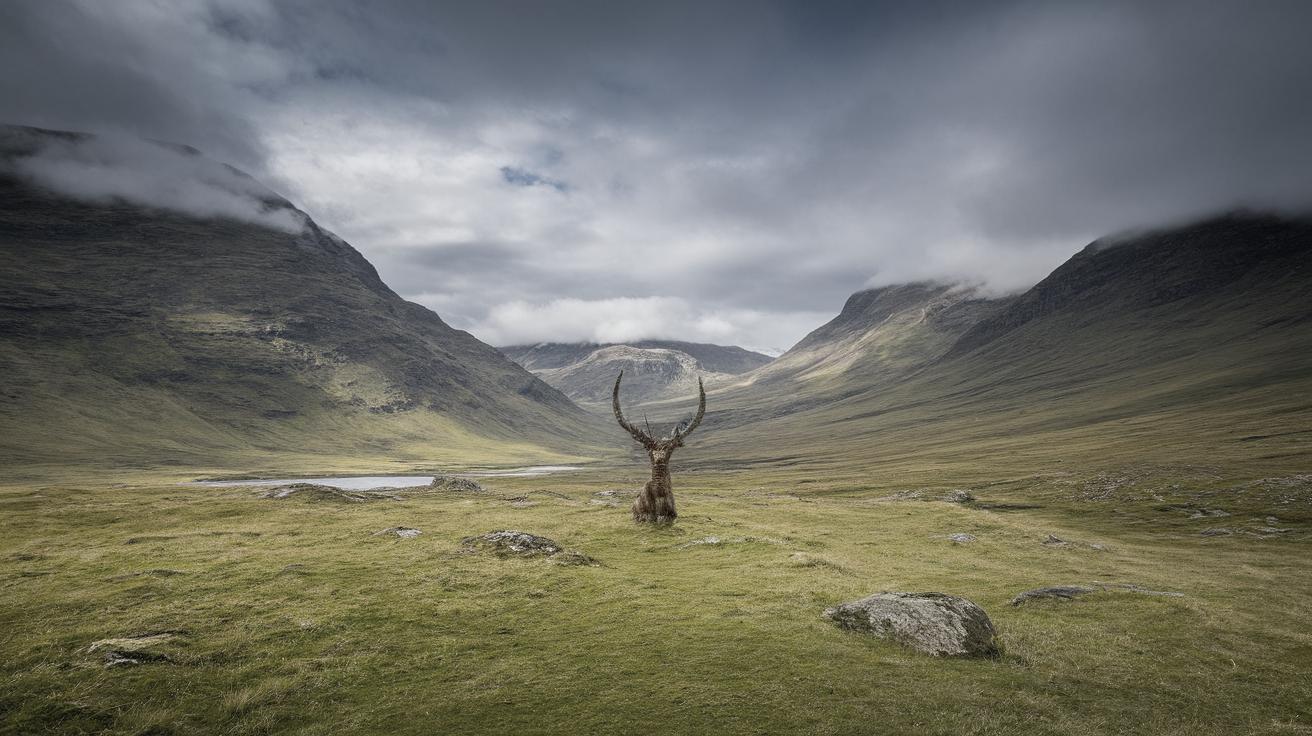
Beira: Scotland’s Most Powerful God
Scotland, steeped in myth and mystery, has long been the homeland of fascinating folklore and legendary tales. Among these captivating narratives, the god Beira stands as a formidable figure in Celtic mythology. Known as the Queen of Winter, Beira wields power over Scotland’s landscape, shaping weather patterns and crafting its topography. From the creation of year-changing cycles to the formation of some of Scotland’s most sacred sites, Beira’s impact is both formidable and enduring. This article delves into the rich mythology of Beira, exploring her role as a weather creator, her connection to Scotland’s sacred places, and her tasks, including the mythical origins of Ben Wyvis. Additionally, we take brief detours into other captivating myths and tales, reflecting on how these narratives contribute to our understanding of history and culture.
Beira and the Celts
In the rich tapestry of Celtic mythology, Beira emerges as a paramount figure, revered as the embodiment of winter. Known as the Cailleach Bheur, she is portrayed as the personification of age and wisdom, wielding her staff to shape the landscape of Scotland. Beira governs the winter months, and with her control over the cold and storms, she is both feared and respected by the Celts. Her legacy lives on in the oral traditions and customs that continue to permeate Scottish culture.
The Celts, intimate with the natural world around them, revered Beira for her role as the seasonal architect. She was believed to be a creator goddess, one responsible for life and death, prosperity and scarcity. Beira’s deep connection to the natural world reflects the profound respect the Celts had for the forces that governed their lives, underscoring their spirituality and reverence for nature’s cycles.
Creator of the Weather
As the ruler of winter, Beira’s influence over the weather is profound. She is said to create the freezing winds, blizzards, and storms that characterize Scotland’s harsh winters. Her prowess is not confined to destruction alone; she also melts the snow to fill rivers, bringing water to the land. Through these acts, she controls the balance between abundance and desolation, ensuring the Earth’s perpetual rebirth.
Beira’s power as a weather deity underscores her critical role in the Celtic cosmology. This symbiotic relationship between the deity and the climate serves as a reminder of the delicate balance within the natural world. Her narrative illustrates not only the Celts’ understanding of and respect for seasonal changes but also their belief in the divine influence governing these natural phenomena.
The Sacred Places of Scotland
Throughout Scotland, numerous sites are believed to hold significance tied to Beira’s mythology. These sacred places, often embedded within majestic landscapes, are said to be the physical manifestations of Beira’s power and presence. Hills, mountains, and bodies of water frequently feature in stories, pointing to Beira’s role in their creation or transformation.
For instance, the glens and lochs that punctuate the Scottish Highlands are not only breathtakingly beautiful but also serve as reminders of Beira’s timeless influence. They illustrate how folklore and topography intertwine, contributing to a cultural heritage that cherishes the natural beauty of the land and acknowledges the mythological narratives that offer explanations for its existence.
Beira’s Task and the Origin of Ben Wyvis
One of the more intriguing tales involves Beira’s task of creating the mountains of Scotland, notably Ben Wyvis. It is said that she carried massive rocks in an apron, intending to construct a prodigious mountain. However, the apron strings broke, scattering rocks across the land, which formed Ben Wyvis and nearby hills.
This legend not only explains the rugged landscape but also illustrates Beira’s formidable power and the unintended consequences of her actions. The story of Ben Wyvis, much like other mythological accounts, serves as an allegory, reflecting the unpredictable nature of both gods and the elements they control, with the power to shape and reshape the world.
References
The myth of Beira stands amid a wealth of cultural narratives and points to the importance of oral traditions in preserving ancient belief systems. Many of these narratives can be traced to early Celtic tribes who documented histories and values through myths and legends.
Academic research and folklore compilations contribute to the understanding of Beira’s role in Celtic lore. Through scholarly texts and folk stories, this deity’s influence on cultural heritage, as well as her symbolic importance in understanding ancient Celtic society, is preserved for future generations.
Lost in the Labyrinth: The Secrets of Winchester…
While Beira’s narrative is a cornerstone of Scottish mythology, other tales such as those of Winchester’s labyrinth conceal secrets of their own. These complex stories interlink time, spatial design, and cultural influences, contributing significantly to our understanding of historical narratives.
Stingy Jack and the History of the Jack-o’-Lantern
From the threaded tales of Beira to those of Stingy Jack, who tricked the devil and gave rise to the Jack-o’-Lantern, the cross-cultural pollination of folklore demonstrates the universal nature of storytelling as a vehicle for shared human experience and cultural identity.
Sesostris, the Mythical Pharaoh Who Invaded Europe
Much like Beira and other deities of old, the tale of Sesostris, an Egyptian pharaoh, serves as a testament to the expansive reach of ancient myths. This story traverses continents, merging history with myth and underlining the interconnectedness of ancient civilizations.
Tyno Helig: Have We Found the Welsh Atlantis?
Parallel to Scotland’s storied landscapes, Wales boasts its own mysteries with tales of Tyno Helig, often dubbed the Welsh Atlantis. Mythological narratives like these elucidate a shared fascination with lost worlds and the profound human desire to understand the unknown.
Lake Avernus Mythology, Oracles, and the Underworld
Beira and other deities/figures find kindred spirits in legends such as those of Lake Avernus, a sacred site where the realms of the living and the underworld entwine. These narratives offer insights into cultural beliefs about life, the afterlife, and the spaces in between.
Kali Yuga: Why Hindus Believe We Live In…
As foundational myths endure through time, comparisons can be drawn to other cultural beliefs, such as Hinduism’s Kali Yuga. These tales offer frameworks of understanding human existence, emphasizing cyclical time and existential themes similar to those seen in Beira’s myths.
| Section | Description |
|---|---|
| Beira and the Celts | Discusses Beira’s prominence in Celtic mythology and her role as the embodiment of winter. |
| Creator of the Weather | Explores Beira’s power over weather and her influence in shaping the seasonal cycles. |
| The Sacred Places of Scotland | Highlights the sacred sites associated with Beira, emphasizing their mythological significance. |
| Beira’s Task and the Origin of Ben Wyvis | Describes the myth of Beira’s creation of Ben Wyvis, examining its allegorical implications. |
| References | Details sources and academic contributions to the understanding of Beira’s legend. |
| Additional Myths | Briefly touches on other cultural myths and tales with links to themes found in Beira’s story. |